MeDo

KI-Newsletter-Anmeldung Generator.

Verwandeln Sie ein kurzes Briefing in einen ausgefeilten Newsletter-Anmeldebereich. E-Mail-Feld, unterstützender Text, Social Proof und gestylter Code — alles generiert und einsatzbereit.

Newsletter-Anmeldung

Ihre E-Mail-Liste ist die einzige Zielgruppe, die Ihnen wirklich gehört

Social-Media-Algorithmen ändern sich, Werbekosten steigen und die Plattformreichweite sinkt — aber eine E-Mail-Abonnentenliste wächst kontinuierlich und gehört ganz allein Ihnen. Eine gut gestaltete Newsletter-Anmeldekomponente verwandelt passive Besucher in eine direkte, erlaubnisbasierte Zielgruppe. Den Text, das Layout und die Reibung genau richtig zu gestalten, ist eine der wirkungsvollsten Investitionen, die eine Website machen kann.

6 Vorlagen

Newsletter-Anmeldung-Vorlagen, die Sie generieren können

Jede Vorlage ist ein echter Prompt, kein Screenshot. Kopieren Sie ihn in einen KI-Editor oder führen Sie ihn in MeDo aus und erhalten Sie React- und Tailwind-Code zurück.

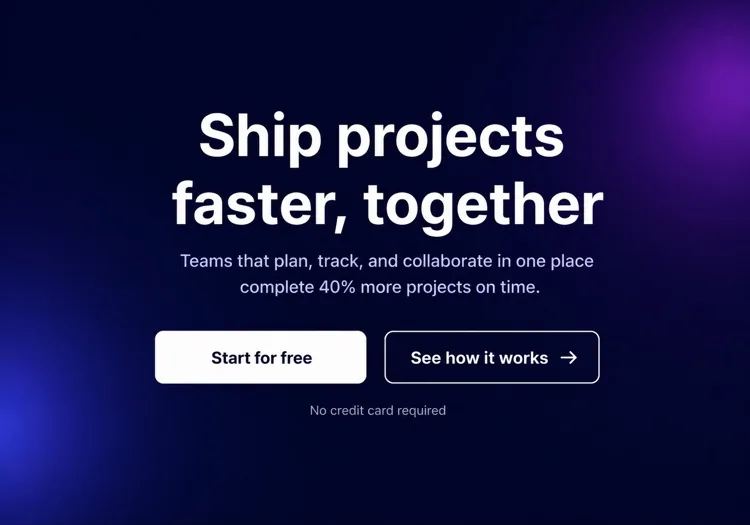
CenteredAcme

Centered Section With One Field

The default: headline, one line of value exchange, email, button. One field is the whole design decision — asking for a first name alongside the email buys you a merge tag and costs you subscribers.

Create a centered newsletter signup section with generous vertical padding: a headline naming the topic and the cadence, one supporting line describing exactly what arrives and how often, then an inline form with a single email input and a Subscribe button sitting flush beside it on desktop and stacked full-width on mobile. Use type="email", autocomplete="email", inputmode="email" and a visually hidden label. Validate on blur and on submit rather than on every keystroke, showing the message in an element referenced by aria-describedby with aria-invalid on the field. Disable the button and swap its label to a spinner while submitting, then replace the whole form with a confirmation message asking the reader to check their inbox.
In MeDo testen
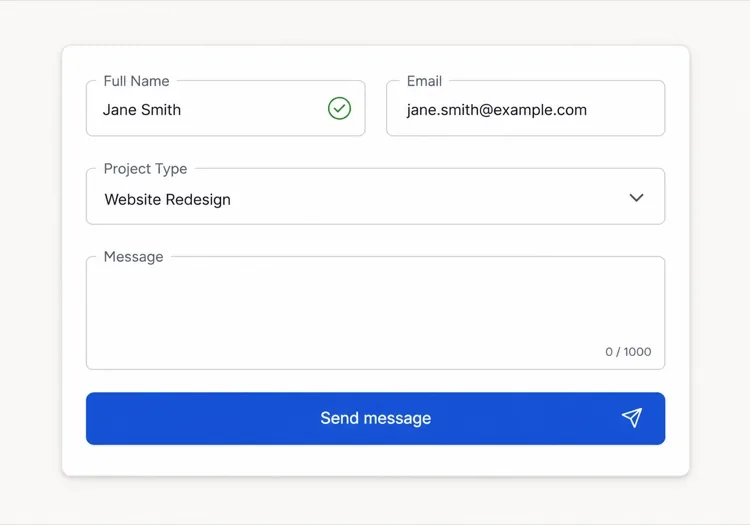
InlineInline

In-Article Capture Strip

A compact strip dropped mid-post, where the reader has already decided the writing is worth their time. Catches intent that a footer form never sees, but it has to stay short — a full section mid-article reads as an interruption.

Create a compact inline newsletter strip for placement mid-article: a tinted rounded panel about the width of the article column, with a one-line bold prompt referencing the topic of the surrounding post, a short second line naming the cadence, and a single-row form with an email input and a short button label. No heading larger than the article body headings, so it does not read as a new section. Validate inline on blur with the error text replacing the cadence line rather than growing the panel, keep the panel height fixed across default, error and success states, and on success swap the form for a one-line confirmation in place.

In MeDo testen
Split panelMega

Two-Column Panel With a Sample Issue

Copy and form on one side, a preview of a real issue on the other. Showing the thing itself outperforms describing it — a reader who can see the format does not have to trust your adjectives.

Create a two-column newsletter signup panel: on the left, a headline, three short bullet points naming what each issue contains, the email form and a muted no-spam line; on the right, a framed screenshot or rendered preview of a recent issue with a link to read it in full before subscribing. Give the right column a fixed aspect-ratio box so the panel does not reflow while the preview image loads. Keep the form to one input plus a button, with inline validation on blur and an aria-live region for the result. Stack to one column on mobile with the preview below the form, and lazy load the preview image.

In MeDo testen
Lead magnetShipfast

Signup Traded for a Download

The email buys a specific artefact rather than a subscription. It converts colder traffic, and it fills your list with people who wanted the file — say plainly that the newsletter continues after it.

Create a lead-magnet signup section: a thumbnail of the asset on the left, and on the right a headline naming the asset concretely, a line stating its format and length, an email input with a Send it to me button, and a small line stating that subscribers also receive the weekly email so the ongoing commitment is not a surprise. Add a required consent checkbox with the wording as a visible label rather than a tooltip, and block submission with an inline message if it is unchecked. On success, show a confirmation that names the sending address and asks the reader to confirm the double opt-in email before the download link arrives.

In MeDo testen
Social proofStudio

Subscriber Count With Reader Faces

A stacked avatar row and a real count above the form. It answers the fear of joining a dead list — but only with a true number, since a rounded-up count is the easiest kind of claim for a reader to disbelieve.

Create a newsletter signup section led by social proof: a stacked row of five overlapping reader avatars with a plus-N chip, then a line stating the subscriber count and who they are, then the headline, then the form. Below the button, a two-item reassurance row covering unsubscribe in one click and no sharing of addresses. Keep the form to one email field with inline validation on blur, aria-invalid on the field and the message wired via aria-describedby. Give the avatars explicit width and height so the row does not shift as images load, and render a confirmation state in place of the form on success rather than a toast.

In MeDo testen
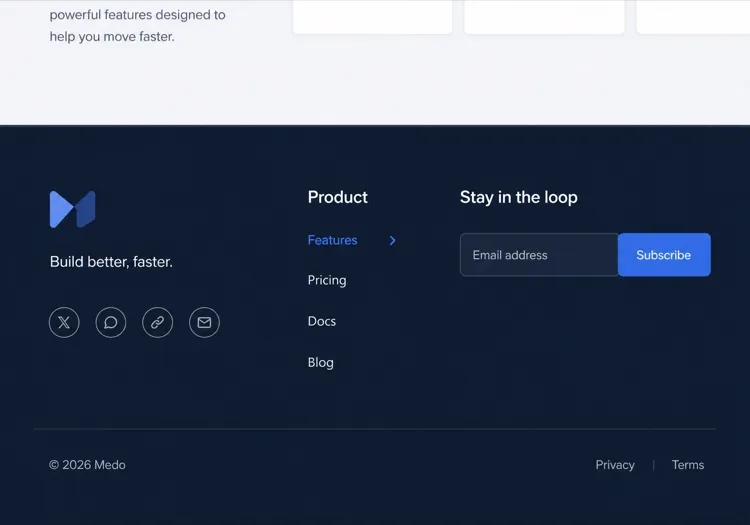
Footer barAnchor

Persistent Bottom Capture Bar

A slim bar pinned to the bottom of the viewport after a scroll threshold. The lowest-friction placement and the easiest one to overdo — one dismissal must be remembered, or it stops being a form and becomes a nuisance.

Create a slim newsletter capture bar fixed to the bottom of the viewport, revealed once the reader passes about 60% scroll depth and animated in with a short translate. It holds one line of copy, an email input, a short button and a labelled dismiss button. Persist the dismissal in localStorage so it never returns for that reader, and hide it entirely for anyone already subscribed. Show validation errors as a tooltip above the input rather than growing the bar, keep the bar under 72px tall, add bottom padding to the page so it never covers the final content, respect prefers-reduced-motion, and collapse to a single tap target that expands into the form on mobile.

In MeDo testen

So passen Sie Ihre Newsletter-Anmeldung an

Genau benennen, was der Abonnent bekommt und wann

Vage CTAs wie „Abonnieren Sie unseren Newsletter" performen schlecht. Ersetzen Sie es durch Konkretheit: „Jeden Freitag eine umsetzbare Wachstumstaktik" oder „Wöchentliche Fallstudien für Indie-Gründer". Je genauer Sie den Inhaltsrhythmus und das Format beschreiben, desto leichter fällt dem richtigen Leser die Entscheidung.

Abonnentenzahl als Social Proof hinzufügen

Eine einzelne Zeile — „Schließen Sie sich 12.000 Lesern an" oder „Von 4.500 Entwicklern geschätzt" — unter dem Abonnieren-Button nimmt die Angst, sich für etwas anzumelden, das niemand liest. Selbst eine bescheidene reale Zahl übertrifft keine Zahl, weil sie signalisiert, dass die Liste lebendig ist.

Das Formular auf ein Feld reduzieren

Nach einem Vornamen neben der E-Mail zu fragen erhöht die Abbruchrate. Beginnen Sie nur mit der E-Mail. Personalisierung kann später erfolgen, sobald der Abonnent im Funnel ist. Jedes zusätzliche Feld ist ein Grund wegzuklicken.

Lead-Magnet für Besucher mit geringem Interesse anbieten

Für Zielgruppen, die mehr Überzeugung brauchen, verbinden Sie das Anmeldeformular mit einem konkreten Geschenk: eine kostenlose Checkliste, eine Beispielausgabe oder eine exklusive Ressource. Eine kleine sofortige Belohnung konvertiert unentschlossene Besucher, die sonst gehen würden, ohne sich anzumelden.

Wer die Newsletter-Anmeldung-Komponente nutzt

SaaS-Produkt-Blog

Produkt-Blogs betten Inline-Newsletter-Anmeldungen mitten im Artikel und am Ende von Beiträgen ein, bieten typischerweise einen Digest neuer Artikel oder eine kuratierte Tool-Liste — und erfassen Leser in dem Moment, in dem sie am meisten mit dem Inhalt beschäftigt sind.

Unabhängiger Creator oder Autor

Solopreneur-Websites zentrieren die gesamte Homepage um eine Newsletter-Anmeldung, führen mit einem mutigen persönlichen Hook — dem spezifischen Thema und Rhythmus — und nutzen eine reale Abonnentenzahl als primäres Glaubwürdigkeitssignal.

E-Commerce oder D2C-Marke

Einzelhandelsseiten nutzen Newsletter-Anmeldungen, um einen Erstbestellungsrabatt anzubieten, und pflegen dann Abonnenten mit Produktlaunches, Nachbeständen und saisonalen Kampagnen — die E-Mail-Liste wird zum direkten Umsatzkanal.

Entwickler-Tool oder Open-Source-Projekt

Entwicklerorientierte Newsletter versprechen Release Notes, Changelog-Zusammenfassungen und technische Deep-Dives. Anmeldungen auf diesen Seiten sind minimal — E-Mail-Feld, einzeilige Beschreibung und ein Absenden-Button — weil die Zielgruppe Substanz über Stil stellt.

Newsletter-Anmeldung-Muster für verschiedene Websites

Dieselbe newsletter-anmeldung-Komponente, abgestimmt auf die Art der Website, auf der sie läuft.

01 / 06

SaaS Product Blog Signup

Inline mid-article beats a footer form here, because the reader who is 60% through a technical post is the only one whose intent you can actually read. Promise the specific thing — release notes, or a monthly digest — not "our newsletter".

Newsletter-Anmeldung-Stile und -Varianten

Wählen Sie die Variante, die zum Rest der Seite passt, und generieren Sie sie.

01 / 06

Centered Section

Headline, one supporting line, one field, one button, centred with wide padding. The safest default and the one that survives being dropped anywhere on the page, since it makes no assumption about the content around it.

Newsletter-Anmeldung in React, Next.js, Vue und Svelte

React, Next.js, Vue 3, SvelteKit, Astro oder reines HTML — dieselbe newsletter-anmeldung, sechs Wege zur Einbindung.

01 / 06

React Newsletter Signup

Model the form as one status value — idle, submitting, success, error — rather than three booleans, so the impossible states cannot render. Keep the input controlled so validation and the disabled button read from the same source.

src/components/NewsletterSignup.tsx

type Status = 'idle' | 'submitting' | 'success' | 'error'

export function NewsletterSignup() {
  const [email, setEmail] = useState('')
  const [status, setStatus] = useState<Status>('idle')

  if (status === 'success') return <p role="status">Check your inbox to confirm.</p>

  return (
    <form onSubmit={submit} noValidate>
      <input type="email" value={email} onChange={(e) => setEmail(e.target.value)} required />
      <button disabled={status === 'submitting'}>Subscribe</button>
    </form>
  )
}

So fügen Sie Ihre Newsletter-Anmeldung einem Projekt hinzu

Vier Schritte, von der Auswahl einer newsletter-anmeldung-Vorlage bis zum Einsatz in der Produktion.

01~30s

Pick a Signup Layout

Match the placement to the reader's state — inline mid-article for engaged readers, a centred section for a landing page, a split panel when showing a sample issue does the persuading.

02~10s

Copy the Prompt

Take the prompt into MeDo, or paste it into Lovable, Bolt, v0 or Cursor. Write the real value exchange first — topic, cadence, what arrives — because "Subscribe to our newsletter" is the line that costs you the signup.

03~1min

Generate and Refine

You get React + Tailwind back with a live preview. Follow up in plain English — "add a consent checkbox", "show the error under the input", "keep the panel height fixed across states" — rather than editing markup by hand.

04~2min

Wire It to Your List

Post to your provider from a server action or API route so the token never reaches the browser, turn on double opt-in, and check the success, error and already-subscribed states before shipping.

Häufige Fragen zu Newsletter-Anmeldung

Was ist ein KI-Newsletter-Anmeldung Generator?

Ein KI-Newsletter-Anmeldung Generator ist ein Tool, das aus einer einfachen Beschreibung Ihres Newsletters — Thema, Zielgruppe und Anreiz — eine vollständige Anmeldekomponente mit Text, Layout, E-Mail-Eingabe und gestyltem Code erstellt. MeDo generiert die gesamte Komponente inklusive Überschrift, Fließtext, Eingabefeld, Button und Social-Proof-Zeile in einem einzigen Prompt.

Wie erstelle ich ein Newsletter-Anmeldeformular mit KI?

Öffnen Sie MeDo und beschreiben Sie Ihren Newsletter in einfacher Sprache: für wen er ist, was er behandelt, wie oft er versendet wird und welchen Lead-Magnet Sie anbieten. Zum Beispiel: „Erstelle eine Newsletter-Anmeldung für eine wöchentliche E-Mail über persönliche Finanzen für Millennials — mit Überschrift, zweizeiliger Beschreibung, E-Mail-Eingabe und Abonnieren-Button." MeDo generiert die Komponente; Sie können Styling und Text mit Folgeprompts verfeinern.

Was sollte ein guter Newsletter-Anmeldebereich enthalten?

Mindestens: eine spezifische Überschrift, die Thema und Rhythmus nennt, ein bis zwei Zeilen unterstützenden Text, ein E-Mail-Eingabefeld und einen klaren Abonnieren-Button. Hochperformante Anmeldungen enthalten auch eine Abonnentenzahl als Social Proof, eine einzeilige Datenschutzzusicherung („kein Spam, jederzeit abmelden") und optional einen Lead-Magnet-Hinweis über dem Formular.

Was ist das beste KI-Tool zur Generierung von Newsletter-Anmeldekomponenten?

MeDo ist speziell für die Generierung von UI-Komponenten aus Prompts entwickelt, einschließlich Newsletter-Anmeldungen. Anders als allgemeine Chat-Tools versteht MeDo Konversionsmuster, Komponentenstruktur und Barrierefreiheit — so ist die Ausgabe produktionsreif und kein grober Ausgangspunkt.

Wie kann ich die Newsletter-Anmeldung-Konversionsraten steigern?

Die drei wirkungsvollsten Änderungen sind: vage CTAs durch konkrete Inhaltsversprechen ersetzen, eine reale Abonnentenzahl als Social Proof hinzufügen und das Formular auf ein einziges E-Mail-Feld reduzieren. Darüber hinaus ist die Platzierung wichtig — Inline-Anmeldungen mitten im Artikel übertreffen durchweg reine Footer-Formulare, weil sie Leser erreichen, während sie engagiert sind.

Kann KI auch den Text für meine Newsletter-Anmeldung schreiben?

Ja. MeDo generiert sowohl den Komponentencode als auch den Text darin — Überschrift, Untertitel, Button-Label und Social-Proof-Text — basierend auf Ihrem Prompt. Sie können den Text mit einem anderen Ton umschreiben lassen, eine reale Abonnentenzahl einfügen oder alternative Überschriften testen, ohne Code anzufassen.